
Hair Transplant Clinic Malaysia: Your Complete Guide to Natural Hair Restoration at Dr Ruz Hair Transplant
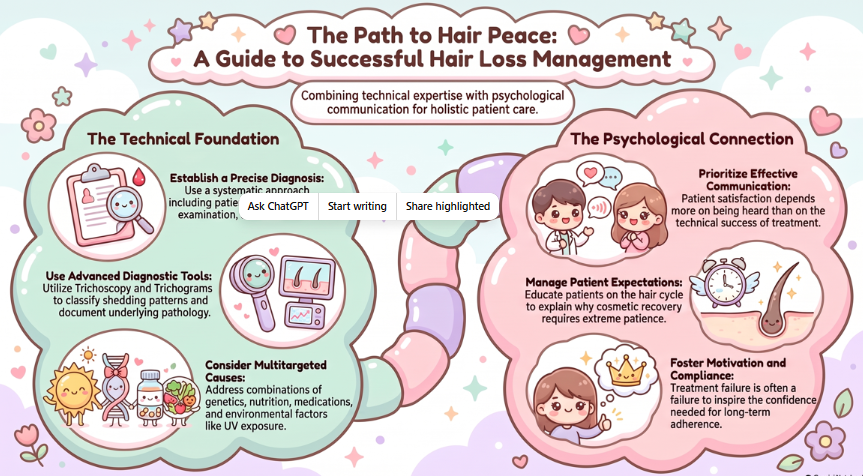
Losing your hair can change more than your appearance. Over time, it can affect the way you see yourself, the way you feel in photographs, and even the confidence you carry into everyday situations. This is where Hair Transplant Clinic Malaysia can help to restore.
For many people, the change starts quietly. Perhaps your hairline looks slightly higher than before. Maybe the parting appears wider. Sometimes, you notice more hair falling during a shower or while styling your hair.
At Interclinic medicine and surgery clinic, we understand that these small changes can feel surprisingly personal. Your hair frames your face, influences your overall appearance, and often forms an important part of your identity.
Therefore, choosing a hair transplant clinic Malaysia is not simply about finding a place that performs surgery. Instead, it is about finding a medical team that understands your hair loss, your facial features, your expectations, and your long-term hair goals.
Our approach begins with education rather than pressure. We believe patients make better decisions when they understand what is happening to their hair and what treatment options genuinely suit them.
Furthermore, our clinical explanations are designed in simple, easy-to-understand language. We want you to understand your choices without having to struggle through complicated medical terminology.
Ultimately, modern hair restoration is about creating a result that looks natural rather than obviously “done”. When the procedure is carefully planned, transplanted hair should blend into your existing hair and complement your facial proportions.
At Interclinic medicine and surgery clinic, our goal is to combine medical science, surgical precision, and artistic judgment to create natural-looking hair restoration.
Visit theinterclinic.com to learn more about our approach and discover whether hair transplantation may be suitable for you.
Understanding How Your Hair Actually Grows – Hair Transplant Clinic Malaysia
Before discussing hair transplantation, it helps to understand the basic biology behind your hair.
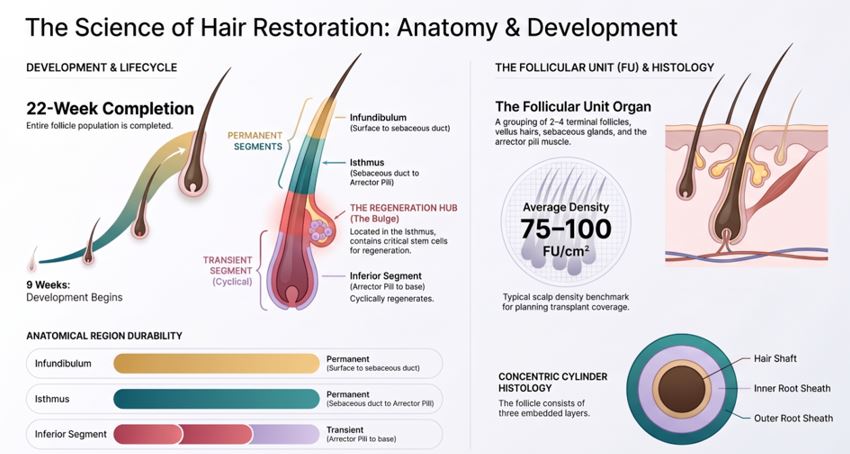
Hair development begins very early in life. During the second month of pregnancy, complex biological signals guide the formation of hair follicles. These processes eventually create the follicular structures that produce your hair.
By around the twenty-second week of pregnancy, the initial population of scalp hair follicles has already been established.
Interestingly, people are born with approximately 100,000 scalp hairs, and the body does not normally create a completely new population of scalp follicles after birth.
Each follicle follows its own growth cycle. Because these follicles operate on different schedules, your hair does not all grow and fall out at the same time.
The normal hair cycle has three main stages: anagen, catagen, and telogen.
During the anagen phase, the follicle actively grows hair. This phase can last approximately three to ten years on the scalp. While anagen continues, rapidly dividing cells within the hair matrix help produce the visible hair shaft.
Next, the catagen phase acts as a short transition period. This stage usually lasts around two to three weeks and involves biological changes within the follicle.
Finally, the telogen phase is the resting stage. It can last approximately three to four months before the old hair eventually sheds.
As a result, losing some hair every day does not automatically mean you are developing baldness. In healthy individuals, shedding around 50 to 100 hairs per day can occur naturally.
However, when the balance between growth, miniaturisation, and shedding changes, visible thinning can gradually develop.
That is why a proper diagnosis matters before considering a transplant.
Why Follicular Units Matter in Modern Hair Transplantation
A successful hair transplant depends on understanding how hair naturally grows.
In the past, older transplant techniques often used large, round grafts. Unfortunately, these methods could create a plug-like appearance that looked very different from natural hair.
Modern transplantation has moved far beyond that approach.
In 1984, Headington described the transverse anatomy of scalp hair and helped establish a clearer understanding of the natural Follicular Unit, or FU.
A follicular unit is a naturally occurring group of hairs. Typically, it contains two to four terminal follicles, along with smaller vellus hairs, sebaceous glands, the arrector pili muscle, and surrounding supporting tissue.
Importantly, the follicle also contains an outer root sheath and a specialised bulge region associated with follicular stem cells.
These structures play an important role in maintaining and regenerating the follicle.
Therefore, preserving the natural follicular unit is a critical part of modern transplantation.
At Interclinic, we focus on harvesting and transplanting intact, carefully prepared follicular units. By maintaining the natural grouping of the hairs, we can create a more natural pattern when the grafts are placed into the recipient area.
A normal scalp may contain approximately 75 to 100 follicular units per square centimetre.
Because donor hair is a limited resource, each follicular unit must be used intelligently.
Rather than simply placing as many grafts as possible, the objective is to use the available donor supply strategically.
Why Hair Transplantation in Malaysia Requires a Personalized Approach
Malaysia presents a unique challenge when it comes to hair transplantation because of its diverse population and wide variation in hair and skin characteristics.
Research cited in the source material indicates that patterned hair loss is common among men in Malaysia and Singapore, with androgenetic alopecia affecting a substantial proportion of the population.
At the same time, ethnic differences can influence the visual appearance of a hair transplant.
Asian hair is commonly straight, dark, and relatively coarse compared with Caucasian hair. The source article notes that average Asian hair shaft diameter may be around 100 micrometres, compared with approximately 70 micrometres in Caucasian hair.
That difference can be a major aesthetic advantage.
Because thicker hair shafts create a stronger visual coverage effect, Asian patients may achieve a fuller appearance with fewer grafts compared with someone whose individual hair shafts are finer.
Nevertheless, thicker dark hair can also create a challenge.
When dark hair contrasts strongly with lighter scalp skin, small irregularities can become easier to see.
For example, gaps, unnatural spacing, poorly designed recipient sites, or inconsistent graft angles can become noticeable.
Different Asian populations also demonstrate different combinations of hair texture, hair colour, and skin tone.
South Indian patients, for instance, may have darker skin and black hair, which can reduce visible contrast. Meanwhile, some Chinese and North Indian patients may have lighter skin with dark hair, increasing the importance of precise graft placement.
Similarly, naturally wavy hair may create additional visual volume because neighbouring hairs can overlap and interlock.
Consequently, a hair transplant clinic Malaysia must consider more than the number of available grafts.
Facial structure matters too.
Asian skull shapes are frequently described as more brachycephalic, it mean the head may appear broader and flatter compared with some other populations.
Because of this, hairline design must suit the person’s facial proportions.
Instead of copying a standard hairline from another patient, the surgeon must create a design that looks appropriate for the individual’s face.
Your Hair Transplant Journey Begins With Diagnosis
From the start of the first graft, it can determine the procedure’s success.
At Interclinic, the consultation process focuses on understanding why you are losing hair and whether transplantation is appropriate for you.
First, we take a detailed medical history. This helps us identify factors that may contribute to hair shedding or thinning.
Certain conditions can resemble pattern hair loss. These include telogen effluvium, thyroid-related problems, and nutritional deficiencies.
Therefore, treating the underlying problem may sometimes be more appropriate than moving directly to surgery.
During the examination, advanced tools such as videomicroscopy and trichoscopy can help assess the scalp and hair in greater detail.
Your hair can also be examined after being wet with sterile saline and carefully combed. This allows the clinical team to assess areas of thinning and better understand the boundaries of future hair loss.
Then, we evaluate the donor area.
We assess donor density, scalp characteristics, and scalp laxity. These factors help determine how much donor hair can realistically be harvested.
For men, hair loss can be classified using the Norwood-Hamilton scale, which ranges from Type I through Type VII.
Women may be assessed using systems such as the Ludwig Scale or the Olsen Christmas tree pattern, particularly when diffuse thinning affects the central scalp.
Psychologically a candidate must be ready and this is very important.
People should not view hair transplantation as a quick fix for unrealistic expectations.
If a young patient has an unpredictable future pattern of baldness, immediate surgery may not be the best choice. Likewise, patients with unrealistic expectations may benefit from medical management and counselling before considering an operation.
For that reason, good candidate selection remains one of the most important parts of successful hair restoration.
FUT vs FUE: What Is the Difference?
One of the most common questions patients ask a hair transplant clinic Malaysia is whether they should choose FUT or FUE.
Clinicians can use both techniques to harvest follicular units, but they obtain those units in different ways.
FUT Hair Transplantation
FUT stands for Follicular Unit Transplantation, and surgeons also call it the strip method.
During FUT, the surgeon removes a narrow strip of tissue from the donor area, usually at the back of the scalp.
At Interclinic, the source article describes an open surgical technique using skin hooks to assist with traction and direct visualisation during excision.
This direct approach can help reduce the risk of transecting follicles during removal.
Technicians carefully divide the strip into smaller sections after harvesting. Highly trained assistants then dissect the tissue under stereoscopic LED microscopes to create individual grafts containing intact follicular units.
A surgeon can close the donor area with a trichophytic closure technique.
The method aims to create a narrow linear scar and promote hair growth across the scar line, making the scar less visible.
Graft handling also matters.
During preparation, follicles need protection from avoidable damage. For larger procedures, the source material describes using specialised chilled storage solutions such as HypoThermosol when grafts remain outside the body for extended periods.
FUE Hair Transplantation – Hair Transplant Clinic Malaysia
FUE stands for Follicular Unit Extraction.
Unlike FUT, FUE does not remove a strip of scalp.
A small microsurgical punch allows clinicians to extract individual follicular units directly from the donor area.
The source article describes punch sizes of approximately 0.75 mm to 1.0 mm.
One major attraction of FUE is that it does not require a linear donor incision or conventional sutures.
As a result, many patients appreciate the smaller extraction marks, potentially lower discomfort, and relatively straightforward recovery.
However, FUE also has technical challenges.
Because the surgeon works around each follicular unit without directly seeing the full underground structure, there can be a risk of follicle transection.
Therefore, surgical skill, punch selection, depth control, and careful extraction technique are extremely important.
At Interclinic, the source article describes the use of motorised punches with depth-control features to help protect the follicular roots.
Ultimately, you should not choose FUT or FUE simply because one sounds more modern.
The right option depends on the patient’s donor supply, hair characteristics, scalp condition, future hair-loss pattern, goals, and overall clinical situation.
Natural Hairline Design: Where Science Meets Art – Hair Transplant Clinic Malaysia
A hair transplant can be technically successful and still look unnatural.
Why?
Because hair does not naturally grow in a perfectly straight row.
Natural hairlines contain irregularity, variation, and gradual changes in density.
Therefore, a perfectly straight and symmetrical hairline can immediately reveal that someone has undergone transplantation.
At Interclinic, hairline planning focuses on recreating the subtle disorder found in nature.
The front transition zone may extend approximately one to three centimetres and gradually increase in density as it moves backward.
At the very front, you can select fine single-hair grafts to create a softer appearance.
We place these hairs in an irregular, wave-like distribution, often described as a Snail Track pattern.
Behind this delicate transition area, stronger two- and three-hair follicular units can add density.
Furthermore, the angle and direction of every graft matter.
Hair should not simply point upward.
Instead, the transplanted hairs need to follow the direction and natural exit angles of the patient’s existing hair.
Asian male hair may often have a more acute exit angle, which requires thoughtful recipient-site creation.
When these details come together, the result can look much more natural.
The best hair transplant is rarely the one people notice.
Instead, it is the one that simply looks like you have naturally good hair.
Hair Transplantation Is Only Part of the Long-Term Plan
A transplant can restore hair to areas affected by permanent follicle loss. However, your existing native hair still matters.
That is why preserving non-transplanted hair can be just as important as the surgery itself.
The source material identifies two FDA-approved medications for progressive hair thinning: Finasteride and Minoxidil.
Finasteride works by reducing the conversion of testosterone into dihydrotestosterone, or DHT.
By inhibiting the 5α-reductase enzyme, it can help slow the miniaturisation of DHT-sensitive follicles.
The source article cites five-year studies showing that Finasteride can help many men maintain or improve hair counts.
Minoxidil acts as a topical treatment that increases blood flow and alters the hair growth cycle.
It can help extend the growth phase of hair and shorten the resting phase.
In addition to medication, some patients may benefit from Low-Level Laser Therapy (LLLT).
According to the source material, red-light laser therapy may stimulate cellular activity and improve hair diameter.
Nutritional correction can also form part of a broader hair-management program.
We consider nutrients such as iron, amino acids, antioxidants, and biotin in each individual case.
Scalp care matters too.
A healthy scalp provides a better environment for your existing and transplanted hair. The source material recommends mild, pH-balanced shampoo and discusses ketoconazole shampoo for controlling dandruff and inflammation.
Clinicians should personalize each patient’s treatment rather than copying another routine.
The bigger picture is simple: transplantation and medical hair preservation should work together.
Hair Transplant Recovery: What Should You Expect?
Knowing what happens after surgery can make the recovery period much less stressful.
During the first 48 hours, some patients may experience mild scalp swelling or forehead edema.
Fortunately, this response is usually temporary and can settle within several days.
During the first week, scalp washing should be gentle.
Avoid directing a strong stream of water directly onto the newly transplanted area because the grafts are still delicate.
Instead, the source article recommends gentle cleansing techniques, including shallow bathing or carefully patting the scalp with diluted baby shampoo.
Around the tenth day, the small scabs surrounding the grafts generally begin to loosen and fall away naturally.
Then, between approximately the second and eighth week, some patients experience shock loss.
This temporary shedding can be alarming, especially when you have just invested in a hair restoration procedure.
However, the source article explains that the visible hair shaft can shed while the living follicle remains beneath the skin.
Around the third or fourth month, early new hairs may begin to appear.
These hairs can initially look fine and delicate.
Gradually, they can become thicker and more mature as the follicles continue developing.
By approximately 12 to 18 months, transplanted hairs may reach their fuller aesthetic effect.
Patience is therefore an important part of the process.
Hair restoration does not happen overnight. It develops progressively as the follicles recover, grow, and mature.
Choosing the Right Hair Transplant Clinic Malaysia
Selecting a clinic is one of the biggest decisions you will make during your hair restoration journey.
Price alone should not determine your choice.
Likewise, an impressive advertisement does not necessarily tell you how carefully a clinic diagnoses hair loss, plans the hairline, handles grafts, or follows patients after surgery.
A reputable hair transplant clinic Malaysia should place proper diagnosis before treatment.
The consultation should feel like a medical assessment rather than a sales presentation.
You should understand why you are losing hair, what treatment options exist, what the procedure can realistically achieve, and what limitations you may face.
At Interclinic medicine and surgery clinic, our philosophy is straightforward.
We believe in clear communication, realistic expectations, thoughtful planning, and long-term patient care.
From your initial inquiry through the procedure and postoperative follow-up, every stage should contribute to one objective: creating a natural result that fits you.
Clinicians should never treat hair restoration as a one-size-fits-all procedure.
Your face is unique.
Your hair pattern is unique.
Your donor supply is unique.
Your future hair loss can also be unique.
Therefore, your treatment plan should be unique as well.
Why Interclinic Takes a Different Approach
At Interclinic, we do not believe that successful hair restoration starts with a package price or a promotional offer.
Instead, it starts with understanding the patient.
We take time to study your scalp, evaluate your donor area, assess the extent of your hair loss, and discuss your expectations.
From there, we can develop a treatment strategy that considers both your immediate appearance and your long-term hair preservation.
Our focus is not simply on adding grafts.
It is on placing the right grafts in the right locations while protecting the valuable donor supply you may need in the future.
Most importantly, the result should look natural.
Your hairline should suit your face.
Your density should look believable.
Your transplanted hairs should blend with your native hair.
Everything should work together rather than appear artificially constructed.
For these reasons, choosing a hair transplant clinic Malaysia is ultimately a decision about trust.
You are not simply choosing where a procedure happens.
You are choosing the people who will evaluate your hair, plan your restoration, perform the surgery, and guide you through the recovery.
Start Your Hair Restoration Journey With Interclinic
Hair loss does not have to define how you feel about your appearance.
With the right diagnosis, suitable treatment, careful surgical planning, and long-term preservation strategy, meaningful improvement may be possible.
At Interclinic medicine and surgery clinic, we combine medical understanding with meticulous surgical technique and a strong focus on natural-looking results.
Rather than promising unrealistic perfection, we believe in honest assessment and thoughtful treatment planning.
Therefore, the first step is not surgery.
The first step is understanding your hair loss.
Once you know what is happening, you can make a more confident and informed decision.
Visit theinterclinic.com to explore our hair restoration services, learn more about hair transplantation, and view our approach to patient care.
When you are ready, arrange a private consultation with Interclinic medicine and surgery clinic.
Your goal is not simply to have more hair.
Your goal is to look natural, feel confident, and recognize yourself again.