
Hair Loss Specialist Malaysia: Your Complete Guide to Hair Loss Treatment and Restoration
Finding more hair than usual in your shower drain can be unsettling. Noticing a wider parting or a receding hairline can feel even more personal. For many people, hair loss is not simply about appearance. It can affect confidence, photographs, social situations, and the way they feel when they look in the mirror. This is where hair loss specialist Malaysia can help you.
However, hair loss does not always mean you are going bald permanently. Different conditions can cause shedding, thinning, or bald patches. Some improve when you treat the underlying cause. Others require long-term medical management. In suitable cases, hair transplantation can restore hair to areas where follicles have stopped growing.
The important thing is to understand why your hair is falling out before deciding what to do about it.
If you are searching for a hair loss specialist Malaysia, you may already have questions. Is your hair loss genetic? Can medication help? Do you need a hair transplant? Will your existing hair continue to thin? And how can you tell whether a clinic is offering a suitable treatment rather than simply selling a procedure?
At Dr. Ruz Hair Transplant, we believe those questions deserve proper medical answers. Our approach begins with understanding your hair loss, assessing your scalp, and discussing realistic treatment options. Sometimes, the best first step is medical treatment. In other cases, transplantation may be appropriate.
This guide explains the common causes of hair loss, how specialists investigate them, and what you can expect from a professional hair restoration journey in Malaysia.
What Does a Hair Loss Specialist Actually Do?
A hair loss specialist in hair loss specialist Malaysia is a medical professional who evaluates hair and scalp problems and helps identify suitable treatment options.
Although many people associate hair loss with male pattern baldness, the condition can have several causes. Genetics, hormonal changes, nutritional deficiencies, illness, medication, inflammation, and autoimmune conditions can all affect hair growth.
Therefore, a proper consultation should involve more than looking at your hairline and recommending a procedure.
A specialist may assess:
- Your pattern of hair loss.
- How quickly the shedding started.
- Your family history.
- Your scalp condition.
- The thickness of your existing hair.
- Possible medical or hormonal contributors.
- Whether your donor hair can support transplantation.
- Your expectations and long-term goals.
Most importantly, a good consultation should help you understand what can realistically improve and what may require ongoing management.
At Dr. Ruz Hair Transplant, we focus on a doctor-led assessment before discussing treatment. This allows us to recommend an approach that suits your condition rather than assuming every patient needs the same solution.
Understanding How Your Hair Grows
To understand hair loss, hair loss specialist Malaysia helps to know how a healthy hair follicle works.
A hair follicle is a small structure beneath your scalp that produces a hair shaft. Each follicle follows its own growth cycle. As a result, your hair does not all grow and fall out at the same time.
The cycle has three main stages.
1. Anagen: The Growth Phase
During the anagen phase, the follicle actively produces hair.
This stage can last for several years. The longer a follicle remains in this phase, the longer the hair can grow.
Most of the hair on a healthy scalp is normally in the growth phase at any given time.
2. Catagen: The Transition Phase
Next, the follicle enters a short transition period.
Growth slows down, and the follicle begins to shrink. This stage usually lasts only a few weeks.
3. Telogen: The Resting Phase
Finally, the follicle enters a resting period.
After several months, the old hair sheds. A new hair may then begin growing from the same follicle.
It is normal to lose some hair every day. In fact, many healthy adults shed approximately 50 to 100 hairs daily.
However, the amount of shedding is not the only thing that matters. The more important question is whether your follicles continue producing healthy replacement hair.
If more follicles enter the resting phase at the same time, you may notice increased shedding. Conversely, if follicles gradually become smaller, you may notice thinning even without dramatic hair fall.
That distinction is one reason a professional hair loss assessment matters.
Why Does Hair Loss Happen?
Hair loss can develop for different reasons. Some people experience one main cause, while others have several factors contributing to their thinning.
The most common causes include:
- Genetic pattern hair loss.
- Temporary shedding after illness or stress.
- Nutritional deficiencies.
- Hormonal changes.
- Autoimmune conditions.
- Scalp inflammation.
- Certain medications.
- Physical damage to the hair or scalp.
Let’s look at the most important types.
Male and Female Pattern Hair Loss
Androgenetic alopecia, commonly called pattern hair loss, is one of the most frequent causes of progressive thinning.
It can affect both men and women.
The condition is strongly influenced by genetics. In susceptible individuals, certain hair follicles are sensitive to a hormone called dihydrotestosterone, or DHT.
DHT can gradually cause these follicles to become smaller. This process is called miniaturisation.
Over time, the affected follicles may produce:
- Thinner hair.
- Shorter hair.
- Lighter-coloured hair.
- Hair that grows for a shorter period.
Eventually, some follicles may stop producing visible hair.
How DHT Affects Hair Follicles
Your body naturally produces testosterone. An enzyme called 5-alpha-reductase converts some testosterone into DHT.
In genetically susceptible follicles, DHT can influence the growth cycle.
The follicle does not usually disappear immediately. Instead, it may gradually produce smaller and weaker hairs over several growth cycles.
That is why early treatment can be valuable. The sooner you identify progressive miniaturisation, the more opportunity you may have to preserve existing hair.
Male Pattern Hair Loss
Men often notice thinning at the temples, a receding frontal hairline, or reduced density at the crown.
The Norwood-Hamilton Scale is commonly used to describe the progression of male pattern hair loss.
However, your stage is only one part of the assessment. Your age, family history, donor area, and future hair loss pattern also matter.
Female Pattern Hair Loss
Women more commonly experience diffuse thinning across the top of the scalp.
The frontal hairline may remain relatively preserved, although some women also experience recession.
The Ludwig Scale is one system used to describe female pattern hair loss.
Importantly, women with thinning hair should not automatically assume they have genetic hair loss. Other causes, including iron deficiency, thyroid problems, hormonal changes, and temporary shedding, may also contribute.
Telogen Effluvium: When Hair Suddenly Starts Shedding
Have you ever noticed a lot of hair falling out several weeks after an illness, major stress, or significant weight loss?
This may be telogen effluvium.
Telogen effluvium happens when a larger-than-usual number of hair follicles enter the resting phase around the same time.
Common triggers include:
- High fever or significant illness.
- Major surgery.
- Severe emotional stress.
- Rapid weight loss.
- Childbirth.
- Significant nutritional deficiencies.
- Certain medications.
The timing can be confusing. You may recover from the original event and only notice the shedding later.
Fortunately, telogen effluvium is often temporary. Once the underlying trigger is addressed, hair growth may gradually return.
Nevertheless, persistent shedding deserves assessment. Sometimes, more than one condition is present.
Alopecia Areata: Sudden Bald Patches
Alopecia areata is an autoimmune condition that can cause sudden, smooth, round patches of hair loss.
The immune system mistakenly attacks hair follicles. As a result, hair may fall out in clearly defined areas.
Some people develop only one small patch. Others experience more extensive hair loss.
The condition can improve, but the course varies from person to person. Medical assessment is important because the treatment approach differs from genetic pattern hair loss.
Scarring Alopecia: Why Early Assessment Matters
Scarring alopecia is a group of conditions in which inflammation damages hair follicles and replaces them with scar tissue.
Once a follicle is permanently destroyed, it cannot produce hair in the same way.
Therefore, early recognition is especially important.
Signs that may require prompt assessment include:
- Persistent scalp redness.
- Burning or tenderness.
- Itching with progressive thinning.
- Smooth areas where follicular openings appear absent.
- Hair loss that continues despite usual treatments.
Not every case of scalp irritation is scarring alopecia. However, unexplained hair loss with scalp inflammation should not be ignored.
How a Hair Loss Specialist Malaysia Diagnoses the Problem
A good diagnosis begins with your story.
At Dr. Ruz Hair Transplant of Hair Loss Specialist Malaysia , we take time to understand when your hair loss started, how it has changed, and what concerns you most.
Your Medical and Hair History
During your consultation, we may discuss:
- Your age and the timing of your hair loss.
- Whether your parents or siblings have similar thinning.
- Recent illness, surgery, or major stress.
- Weight changes and dietary habits.
- Current medications.
- Previous hair treatments.
- Scalp symptoms such as itching or pain.
- Your expectations for treatment.
These details help us identify patterns that may not be obvious from photographs alone.
Hair Loss Specialist Malaysia do Scalp Examination and Trichoscopy
A scalp examination allows us to assess the condition of your skin and hair.
We may also use trichoscopy, a non-invasive examination that magnifies the scalp and hair shafts.
This can help identify:
- Differences in hair thickness.
- Miniaturised hairs.
- Follicular patterns.
- Signs of inflammation.
- Changes that may suggest scarring.
- The overall condition of your donor area.
For example, two people may both have a receding hairline. However, one may have stable genetic hair loss, while another may have active scalp inflammation or a different underlying condition.
Their treatment plans should not be identical.
Hair Loss Specialist Malaysia do Blood Tests When Necessary
Blood tests are not required for every patient.
However, they may be useful when your history or examination suggests a possible medical contributor.
Depending on your situation, a doctor may consider tests related to:
- Iron stores.
- Thyroid function.
- Hormonal balance.
- Other nutritional or medical factors.
The goal is simple: find the cause before choosing the treatment.
Can Hair Loss Be Treated Without Surgery by Hair Loss Specialist Malaysia?
Yes.
A hair transplant is not always the first or best step.
For many patients, medical treatment can help slow progression, improve the quality of existing hair, or support recovery from temporary shedding.
The right treatment depends on the diagnosis.
Topical Minoxidil
Minoxidil is a commonly used treatment for certain types of hair loss.
It is applied directly to the scalp and may help support hair growth in suitable patients.
However, it does not work for every cause of hair loss. It also requires consistent use.
Some patients experience temporary increased shedding when starting treatment. This can be concerning, but it does not necessarily mean the treatment is failing.
Your doctor can explain what to expect and whether the treatment is appropriate for you.
Oral Finasteride
Finasteride is a prescription medication commonly used for male pattern hair loss.
It works by reducing the conversion of testosterone into DHT.
For suitable men, it can help slow further miniaturisation and support the preservation of existing hair.
However, it is not suitable for everyone. Your doctor should discuss its benefits, possible side effects, and whether it fits your medical history.
Low-Level Laser Therapy
Low-level laser therapy, or LLLT, is another option that may help selected patients.
It uses low-intensity light to support cellular activity in hair follicles.
Some people prefer it because it does not involve daily oral medication.
Nevertheless, results vary. It should be considered as part of an appropriate treatment plan rather than a guaranteed cure.
When Is a Hair Transplant Appropriate to do by Hair Loss Specialist Malaysia?
A hair transplant may be suitable when you have permanent hair loss in areas where hair has become significantly thinner or disappeared.
However, not everyone is a good candidate.
A specialist should consider:
- The cause of your hair loss.
- Whether your loss is stable.
- The strength of your donor area.
- The number of grafts available.
- Your age and future hair loss pattern.
- Your expectations.
- Whether medical treatment should come first.
This is important because a transplant moves existing follicles. It does not create an unlimited supply of new hair.
A good hair restoration plan protects both your transplanted hair and your existing hair.
FUT and FUE: Understanding the Main Transplant Techniques by Hair Loss Specialist Malaysia
Two commonly discussed hair transplant techniques are FUT and FUE.
Both involve moving hair follicles from a donor area to areas affected by hair loss.
The main difference is how the grafts are harvested.
FUT: Follicular Unit Transplantation
FUT is also known as the strip method.
During FUT, the surgeon removes a strip of hair-bearing scalp from the donor area. The strip is then divided into individual follicular units.
These grafts are carefully prepared and placed into the recipient area.
FUT can be useful in selected patients, particularly when a larger number of grafts is required.
However, it leaves a linear scar. The appearance of that scar depends on factors such as surgical technique, healing, and the patient’s individual characteristics.
FUE: Follicular Unit Extraction
FUE involves harvesting individual follicular units directly from the donor area.
The surgeon uses a small punch to extract the grafts one by one.
Because FUE does not involve removing a strip of scalp, it avoids a linear donor scar.
Instead, it produces many small extraction sites.
FUE is popular because it can offer a less invasive harvesting approach and may suit patients who prefer shorter hairstyles.
However, it is not automatically better for every patient. The technique must match the donor area, the number of grafts needed, and the patient’s goals.
At Dr. Ruz Hair Transplant, we assess these factors before recommending a suitable approach.
Why Hairline Design Matters for Hair Loss Specialist Malaysia
A hair transplant is not simply about filling an empty area.
It is about creating a result that looks natural as your hair grows.
The hairline plays a major role in how people perceive your face. Therefore, its position, shape, and direction matter.
A hairline that is too straight can look artificial. A hairline that is too low may not suit your age or future hair loss pattern.
The Snail Track Hairline
At Dr. Ruz Hair Transplant, we use the Snail Track approach to create a more natural-looking hairline.
The technique uses a gentle, irregular contour rather than a perfectly straight line.
This helps recreate the subtle variation seen in natural hairlines.
We also consider the placement of different follicular units.
Single-hair grafts can help create a softer frontal edge. Multi-hair grafts can provide density further behind the hairline.
Direction and Angle
Natural hair does not grow straight out of the scalp.
It grows at different angles and directions depending on the area.
Therefore, the surgeon must consider how the transplanted hair will grow, not just where it will be placed.
Proper orientation can make a significant difference to the final appearance.
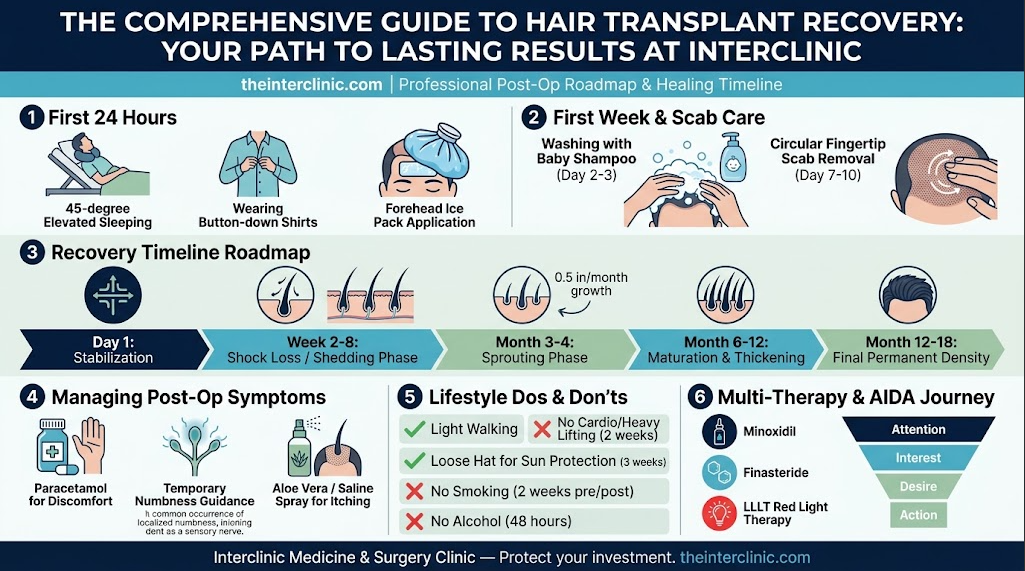
What Happens After a Hair Transplant with Hair Loss Specialist Malaysia?
Recovery is an important part of the treatment journey.
Your doctor will provide specific instructions based on your procedure and healing.
Generally, the first few days require gentle scalp care.
You may experience some redness, swelling, or small scabs. These usually improve as the scalp heals.
The First Few Weeks
During the early recovery period, you should follow your clinic’s washing and aftercare instructions carefully.
Avoid unnecessary rubbing or scratching.
You may also need to adjust how you sleep and wash your hair temporarily.
Temporary Shedding
Some transplanted hair shafts may shed a few weeks after surgery.
This is commonly called shock loss.
It can be alarming, but it is often a normal part of the hair growth cycle.
The transplanted follicles may remain healthy beneath the skin. New growth usually takes time.
When Will You See Results?
Hair growth does not happen overnight.
Many patients begin noticing new growth after several months.
Visible improvement often becomes more noticeable around six months. However, the final result may continue maturing for 12 to 18 months.
Your individual timeline can vary.
The key is to understand that a hair transplant is a process, not an instant transformation.
Why Long-Term Follow-Up Matters for Hair Loss Specialist Malaysia.
One of the most important parts of hair restoration is what happens after the procedure.
A transplant can restore hair to areas affected by permanent loss. However, your existing hair may continue to thin if the underlying condition remains active.
That is why long-term follow-up matters.
At Dr. Ruz Hair Transplant, we provide comprehensive follow-up for 18 months.
This allows us to monitor your progress, assess your healing, and guide you through the different stages of hair growth.
We also discuss medical management when appropriate to help preserve your existing hair.
For patients who travel overseas for surgery, returning home can make follow-up more difficult. Having a local medical team available in Malaysia can provide reassurance and continuity of care.
Why Choose Dr. Ruz Hair Transplant of Hair Loss Specialist Malaysia?
Choosing a hair loss specialist is an important decision.
You are not simply choosing a procedure. You are choosing a medical team to guide you through a personal and often emotional journey.
At Dr. Ruz Hair Transplant, our approach focuses on:
Doctor-led assessment. We begin by understanding your hair loss before recommending treatment.
Personalised planning. Your hairline, donor area, and long-term goals all influence the treatment plan.
Natural-looking results. We pay close attention to hairline design, direction, and graft placement.
Evidence-based care. We consider medical treatments when they may help preserve or improve your existing hair.
Comprehensive follow-up. Our 18-month follow-up programme supports your recovery and allows us to monitor your progress.
Realistic expectations. We believe patients deserve clear information about what treatment can and cannot achieve.
Most importantly, we want you to feel informed before making a decision.
Your Hair Loss Journey Starts with the Right Assessment
Hair loss can be frustrating. However, you do not have to navigate it alone.
Whether you are noticing early thinning, experiencing sudden shedding, or considering a hair transplant, the first step is understanding what is happening.
A proper assessment can help you identify the cause, explore suitable treatment options, and make a decision with greater confidence.
If you are looking for a hair loss specialist Malaysia, Dr. Ruz Hair Transplant is here to help you understand your options.
Ready to Take the Next Step?
Book a personalised consultation with Dr. Ruz Hair Transplant.
During your consultation, we will assess your hair loss, discuss your concerns, and explain which treatment options may be suitable for you.
You can also send us photos of your hair before your appointment so we can better understand your concerns.
Your hair journey deserves a medical plan, not a guess.
Visit drruzhairtransplant.com to learn more or book your consultation.
Dr. Ruz Hair Transplant — Helping you make informed decisions about your hair, your appearance, and your confidence.